A contractor website turns visitors into quote requests when it shows, within seconds, what you do, where you work and how to get a quote. The seven things that matter most are a clear headline with your service area, a short quote form, a tap-to-call phone number, real project photos, honest reviews, proof you are licensed and insured, and a simple explanation of how your process and pricing work.
Most homeowners looking for a roofer, plumber or remodeler compare two or three companies on their phone before they contact anyone. They are not reading every page. They are scanning for signs that you do the job they need, in their area, and that you are safe to let into their home.
If your website makes that easy, quote requests come in. If it hides the phone number, shows stock photos and asks for fifteen form fields, people go back to the search results and call the next company. Here are the seven things that make the difference.
1. Does your homepage say what you do and where you work?
A contractor homepage should say, in one plain sentence near the top, what service you offer and which towns or areas you cover. "Roof repair and replacement in Dayton and surrounding towns" works far better than "Quality you can trust."
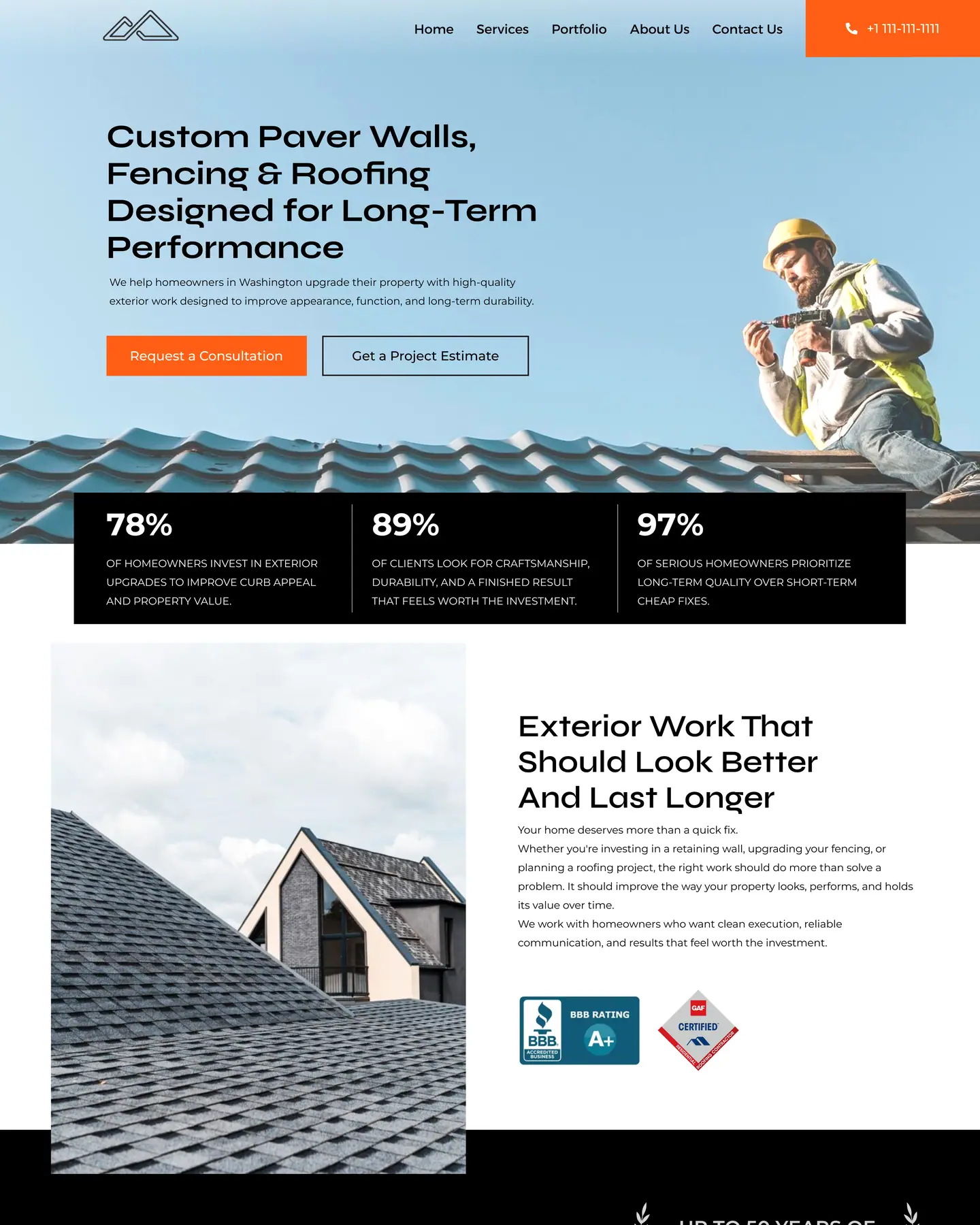
A visitor should not have to scroll or open a menu to find out whether you serve their street. Put the main service, the service area and one button ("Get a free quote") in the first screen. If you work in several towns, list the main ones and link to a page that covers the rest.
2. How short should a contractor quote form be?
A contractor quote form should ask only for what you need to call the person back: name, phone or email, town or zip code, the type of job and an optional short description. Every extra field gives a busy homeowner another reason to stop.
Some practical points:
- Keep it to five or six fields. Budget, timeline and property details can wait for the first phone call.
- Let people add photos if they want to. A picture of a leaking pipe or a damaged roof helps you prepare, but make it optional.
- Say what happens next. A line like "We reply within one business day" sets expectations and reduces repeat calls.
- Test it yourself. Send a test request every few months to make sure the messages still reach your inbox.
3. Is your phone number easy to tap on a phone?
Your phone number should appear at the top of every page and work as a tap-to-call link on mobile. Many people who need a contractor, especially for urgent repairs, would rather call than fill in a form.
Use the number you actually answer, show your hours next to it, and make sure it matches the number on your Google Business Profile. If you offer emergency service, say so clearly beside the number rather than burying it on a separate page.
4. Which project photos convince people to ask for a quote?
Real photos of your own finished jobs convince people far more than stock images. A homeowner wants to see work that looks like their house and their problem, done by your crew.
Good photos for a contractor website include:
- Before and after pairs of the same job, taken from the same angle
- Your crew and branded vehicle on site (this shows you are a real local company)
- Close-ups of finished details, such as flashing, tile edges or clean pipe runs
- A short caption with the job type and town, for example "Full roof replacement, Kettering"
You do not need a professional photographer for this. A recent phone, good daylight and a tidy site are usually enough. Avoid blurry shots and photos with customers' faces or house numbers visible unless they have agreed.
5. Where should reviews go on a contractor website?
Reviews should sit close to the places where people decide to contact you: near the top of the homepage, on each service page and next to the quote form. A few specific reviews that mention the job and the town are worth more than a long wall of five-star ratings.
Use real reviews from Google or other review sites, with the customer's first name and the type of job. Link to your Google reviews so people can read more if they want. Never write reviews yourself or edit what customers said; homeowners can usually tell, and it can break the rules of review platforms.
6. How do you show you are licensed, insured and trustworthy?
Show your license number (where your state or province issues one), mention that you carry liability insurance, and list any manufacturer certifications or trade association memberships you actually hold. Put these in a small trust strip near the top and again near the form.
Other simple trust signals help too:
- A short "About us" section with the owner's name and how long the business has run
- A real street address or the area you are based in
- Your warranty on workmanship, written in plain words
- Payment options and whether you offer financing, if you do
7. Should a contractor website explain the process and pricing?
Yes. A contractor website should explain the steps from first call to finished job and give honest guidance on what affects the price. Many homeowners worry more about surprise costs than about a high quote.
A simple "How it works" section with three or four steps (request a quote, on-site visit, written estimate, the job itself) removes a lot of worry. You do not have to publish exact prices. Saying "Most water heater replacements fall into one of three price ranges, depending on the type and size" and naming what changes the cost is often enough to show you are open about money.
What usually stops visitors from asking for a quote?
The most common blockers are slow pages on mobile, a hidden phone number, a long form and no sign of where the company works. Each one is fixable in a day or two.
| Problem | What the visitor thinks | Simple fix |
|---|---|---|
| No service area shown | "Do they even come to my town?" | Add the main towns to the homepage headline or just below it |
| Stock photos only | "Is this a real company?" | Replace with photos of your own jobs and crew |
| Long quote form | "This will take too long." | Cut it to five or six fields |
| Phone number in the footer only | "I just want to call someone." | Add a tap-to-call number to the header |
| Slow loading on mobile | Leaves before the page appears | Compress large images and remove heavy sliders |
One more blocker is a single page that lists every service at once. People search for specific jobs such as "gutter replacement" or "tankless water heater install", so each main service deserves its own page with photos of that kind of job, a review or two and a quote button. If you are unsure what a site like this should cost, our guide to what changes the price of a small business website walks through it.
How Draftix approaches contractor websites
We build contractor websites around these seven points, using your own photos, reviews and service area. Before you pay anything, we design a free draft of your homepage so you can see how it would look and read. If you like it, we agree a fixed price for the full site. You can see more on our contractor websites page.
Want a contractor site that brings in quote requests?
We will design your homepage first, free, using your services and service area. Then you decide.
See contractor websitesQuestions we get
Do contractors need a website if they get work from referrals?
Yes. Even referred customers usually look you up before they call, and a clear website with photos and reviews confirms the recommendation. Without one, some referrals quietly go to a competitor who looks more established.
Should a contractor put prices on their website?
Exact prices are rarely possible because every job is different, but giving typical ranges or explaining what affects the cost builds trust. It also filters out people looking for a price you cannot match.
How many photos should a contractor website have?
A handful of strong, recent photos per service is better than a large gallery of mixed-quality shots. Aim for clear before and after pairs and add new jobs every few months.
Is a quote form better than a phone number?
You need both. Some people want to call right away, others prefer to send details in the evening, so offer a tap-to-call number and a short form on every page.